What Happens During an Oral Cancer Screening?
For dentists and patients alike, the prevention of oral cancer takes first prize. Early detection comes in at a close second. It is why more and more dentists are incorporating oral cancer screening into routine dental visits. This article goes over the need for oral cancer screening and what a patient should expect from the procedure.
Oral cancer and the need for early detection
Despite oral cancer accounting for less than five percent of all cancer cases in the US, it has a high percentage of poor outcomes. This comes down to late detection.
In its early stages, oral cancer has symptoms that can easily pass for minor annoyances that many patients brush off. Here are some seemingly ordinary symptoms that everyone should take seriously:
- Unexplainable bleeding
- A raised red or white patch with a velvety surface
- Persistent sore or lesion that does not heal or go away
- A lump or bump in the soft tissues of the mouth, throat, and neck
- Irritation of the throat that triggers coughing
- Difficulty swallowing
The most tell-tale sign that there is a problem is the persistence of the symptom. Though many of these symptoms could remain painless enough to fly under the patient’s radar, they deserve attention. So instead of learning to live with discomfort as a new normal, anyone experiencing any number of these symptoms should get a screening.
Oral cancer screening: Visual and physical check
Screening for oral cancer can happen during a routine dental visit or when the patient seeks a diagnosis for a problem in their mouth. Here is what to expect from the process.
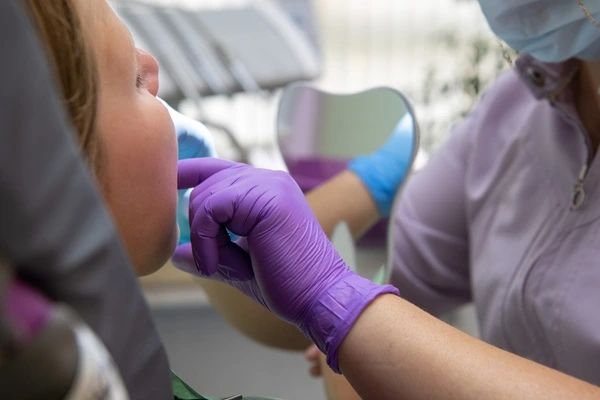
First, the dentist will use light and a mirror to inspect the inside of the mouth. They will look for bumps, sores and patches on the surfaces of the soft palate, mouth floor, inner cheeks, inner lips and the back of the mouth.
The dentist will also perform a physical exam that involves applying gentle pressure to the face, jaw and neck. The use of touch allows the dentist to feel for lumps, painful areas, a decrease in mobility and other abnormalities that could point to oral cancer.
Oral cancer screening tools
Sometimes the dentist may detect an anomaly that requires a closer look. For an in-depth examination, the dentist will need more than a mirror and light. Here are some of the tools that help a dentist identify potentially problematic tissue in the mouth.
- A fiber-optic camera to examine the nose and upper throat
- VELscope, a tool that lights up the oral cavity with blue light, allowing the dentist to see unhealthy cells that are otherwise invisible to the naked eye
- CDx, a brush that painlessly scrapes cells from the problem area for further examination
- An array of dye-based screening instruments that allow the dentist to pinpoint abnormal cells that are otherwise invisible to the naked eye
The tools listed here do not confirm a cancer diagnosis beyond the shadow of a doubt. They are only minimally invasive ways to eliminate other causes of tissue abnormality. If the dentist suspects cancer, they will use a tissue biopsy to confirm the diagnosis.
Be proactive with oral cancer screening
Our dentist incorporates oral cancer screening into routine dental visits. They also recommend the exam for patients with an issue affecting the soft tissues of their mouths. Call our offices to schedule this quick and painless exam. It could go a long way towards ensuring your long-term health.
Request an appointment here: https://knoxvilledentalpartners.com or call Dental Partners South Knoxville at (865) 622-2381 for an appointment in our Knoxville office.
Check out what others are saying about our dental services on Yelp: Oral Cancer Screening in Knoxville, TN.
Related Posts
Gum disease develops in stages, and early action protects oral health and overall wellness. This common condition starts when plaque, a sticky film of bacteria, accumulates along the gumline. When not removed, plaque hardens into tartar, which irritates the tissues and triggers inflammation. Without treatment, inflammation can spread into deeper structures, damaging the ligaments and…
Patients often ask about the importance of maintaining oral health before problems arise. A preventive dentist focuses on avoiding dental issues through proactive care, routine checkups, and education. This blog addresses some of the most frequently asked questions related to preventive dentistry.A preventive dentist works to help patients avoid oral health issues such as cavities,…
A smile makeover offers a fresh start for anyone looking to boost their confidence with a more radiant, balanced appearance. Oftentimes, this transformation involves much more than just a quick fix or a surface-level change. Choosing the right dentist ensures your plan respects the unique anatomy and overall goals.Dream results begin with a healthy foundation…
A root canal is a standard way to save a tooth from severe damage or infection. However, you may have questions or concerns about the recovery process once you get home and the local anesthetic wears off. Here are five common concerns that patients have after a root canal.Mild to moderate discomfort is a common…